
Beginner’s Guide: Oil Painting Essentials Made Simple
Oil paints and materials can be expensive when you’re starting out—but they don’t have to be. I want to share some practical tips on how to keep costs down without compromising on quality or convenience.
Let’s get started.
What you’ll need
An easel, painting palette, oil paints, palette knives, brushes, white spirits or turpentine, a bar of soap, jars or pots, mediums, cleaning aids, paper towels, a sketchpad, pencils, a sharpener, and an eraser.
Making space to paint
When my daughter was young, I didn’t have a dedicated space to paint, so I worked in my living room. While I managed to oil paint just fine, it meant cleaning up and packing everything away after every session. Now I have a spare room where I can paint, and while it’s not a studio (yet!), I enjoy the freedom of making an artistic mess without worrying about constant cleanup.
Easels and paints
Tabletop easels are easy to find at local markets or thrift stores and are a great affordable option. In my early days, I used Winsor & Newton paints from my local art shop. Once I felt more confident, I invested in higher-end brands like Michael Harding and Gamblin—my Michael Harding paints were actually a Christmas gift from my partner.
Affordable palettes and tools
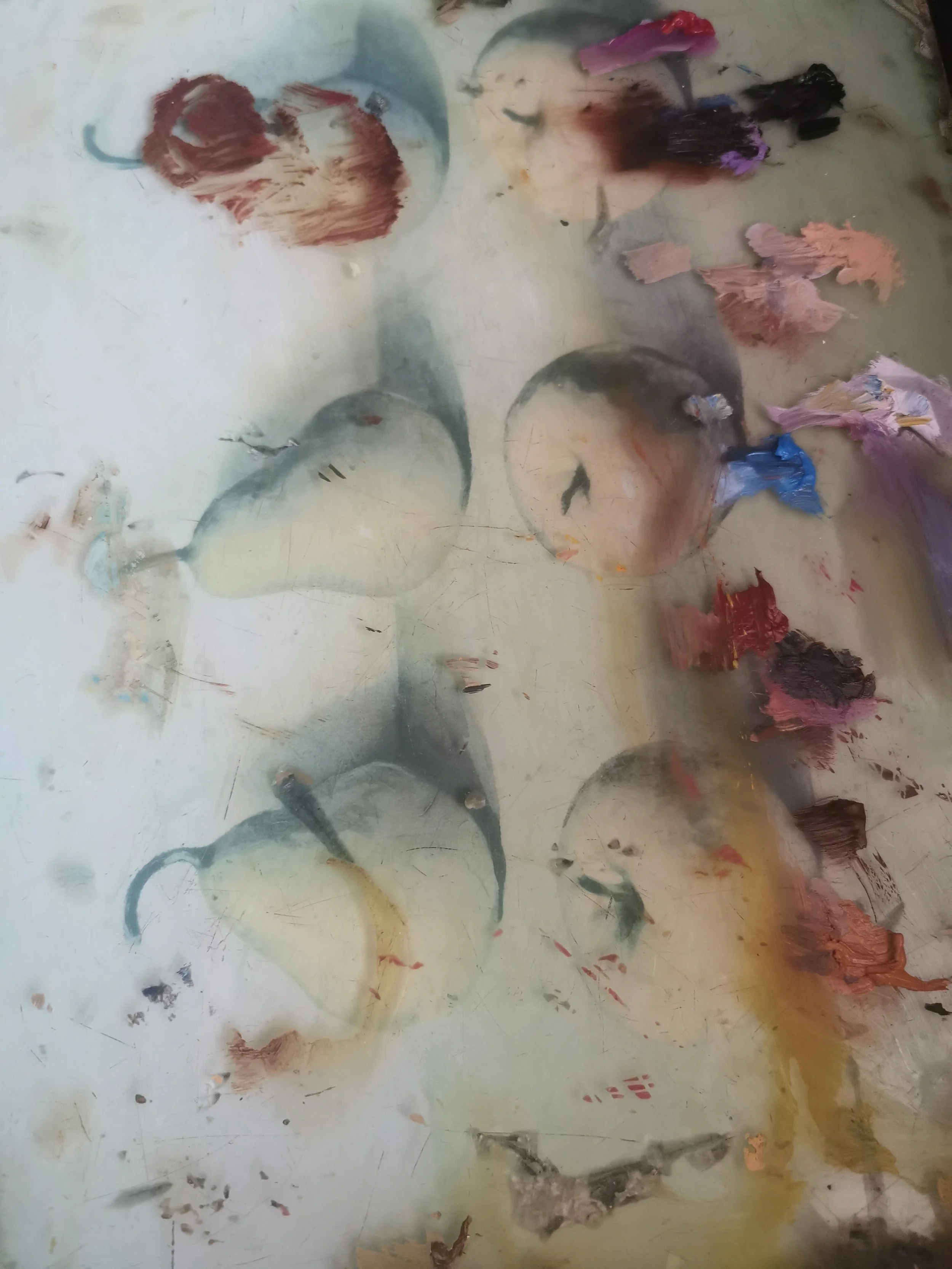
While discarding an old glass chopping board, it dawned on me that it would make a perfect paint palette—and I still use it today. It’s easy to clean: just wipe it down with paper towels after each session. If paint dries on it, a decorating scraper works well, followed by a little white spirits from the hardware store to remove any residue.
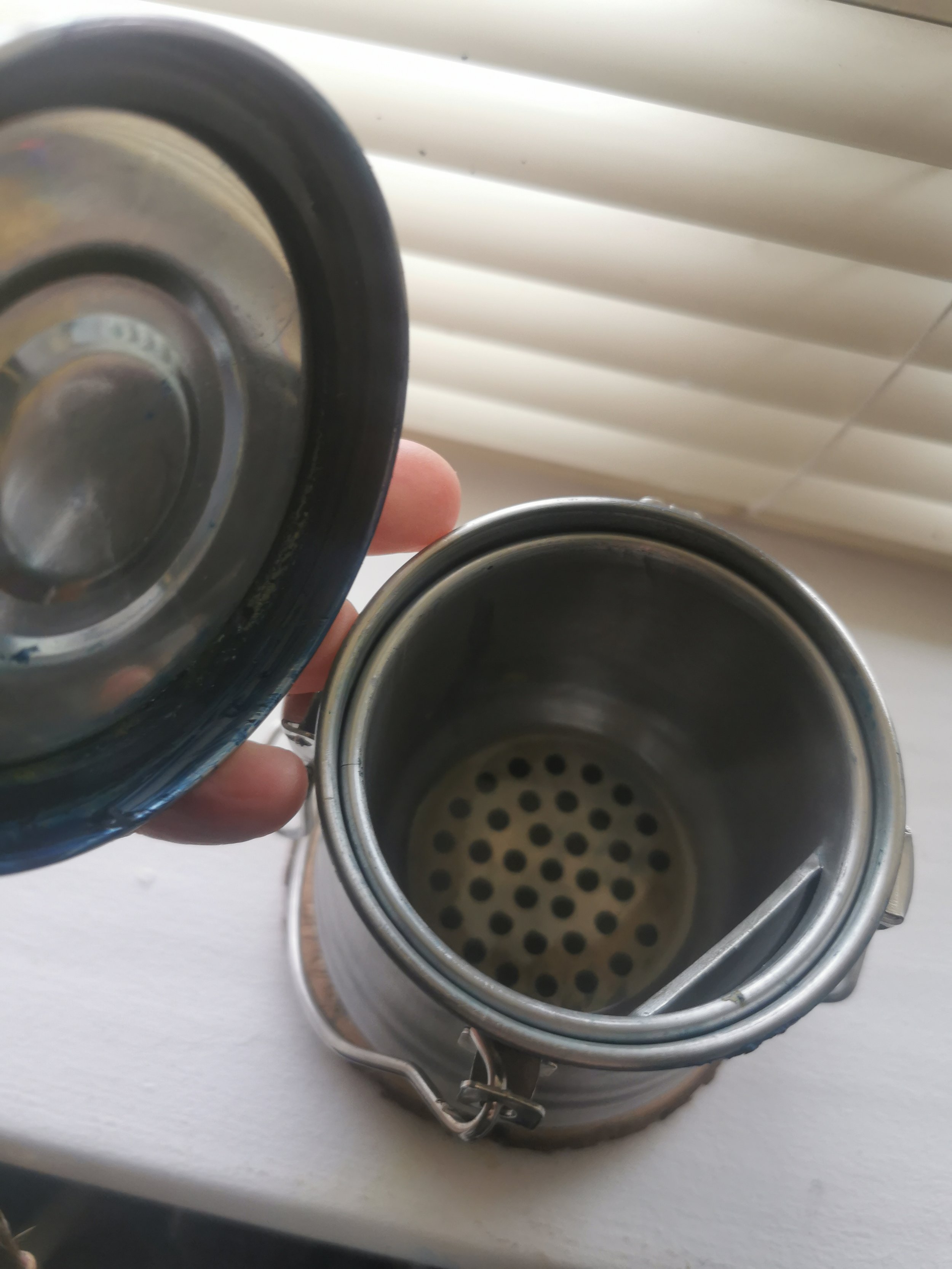
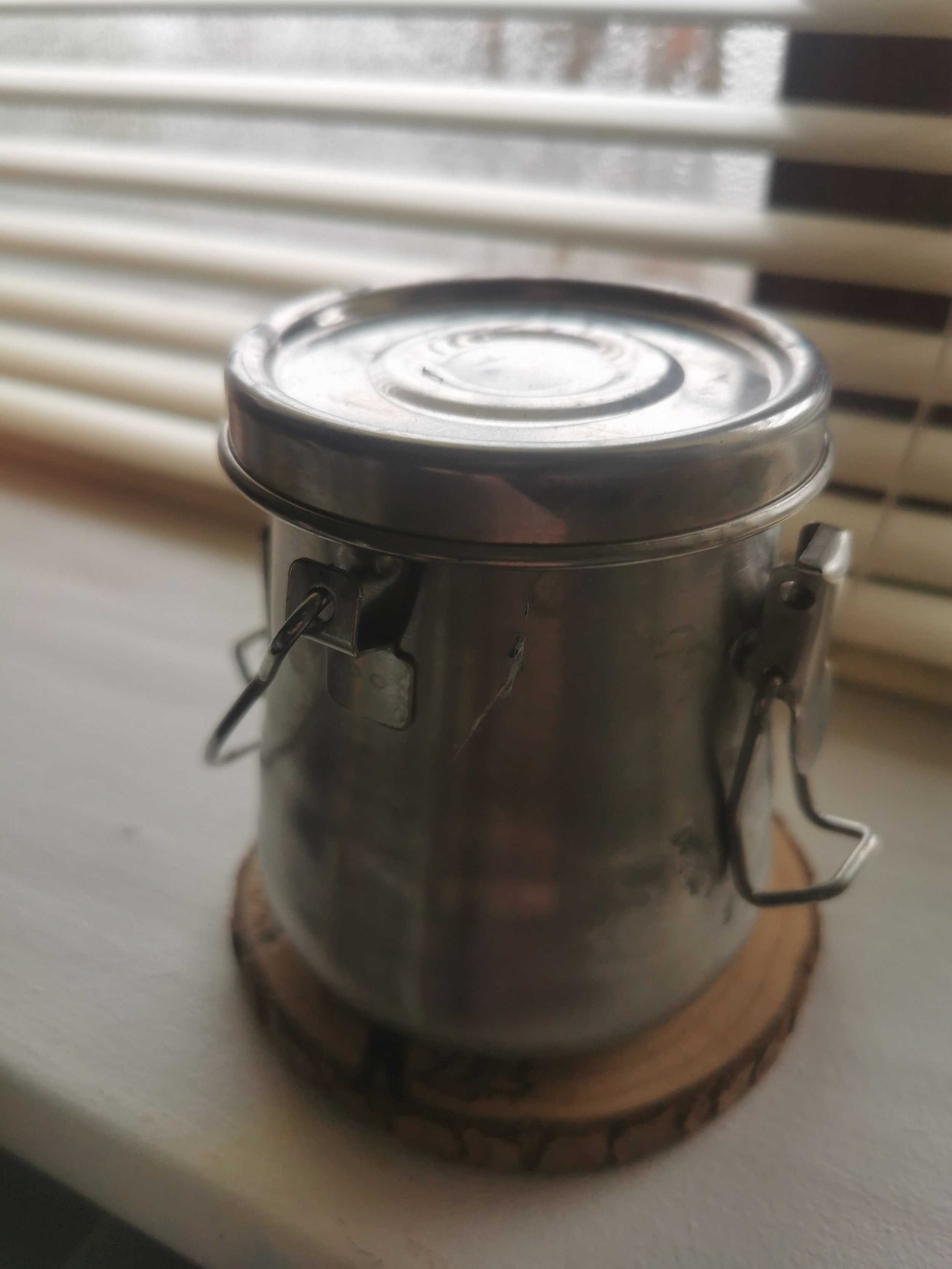
For a long time, I used empty kitchen jars to hold white spirits for rinsing brushes. Later, I bought a few metal brush-cleaning pots with internal grids. They were inexpensive (mine came from Temu), and I wouldn’t be without them now. The side latches keep solvents safely contained, even if they get knocked over.
Cleaning brushes without fancy products
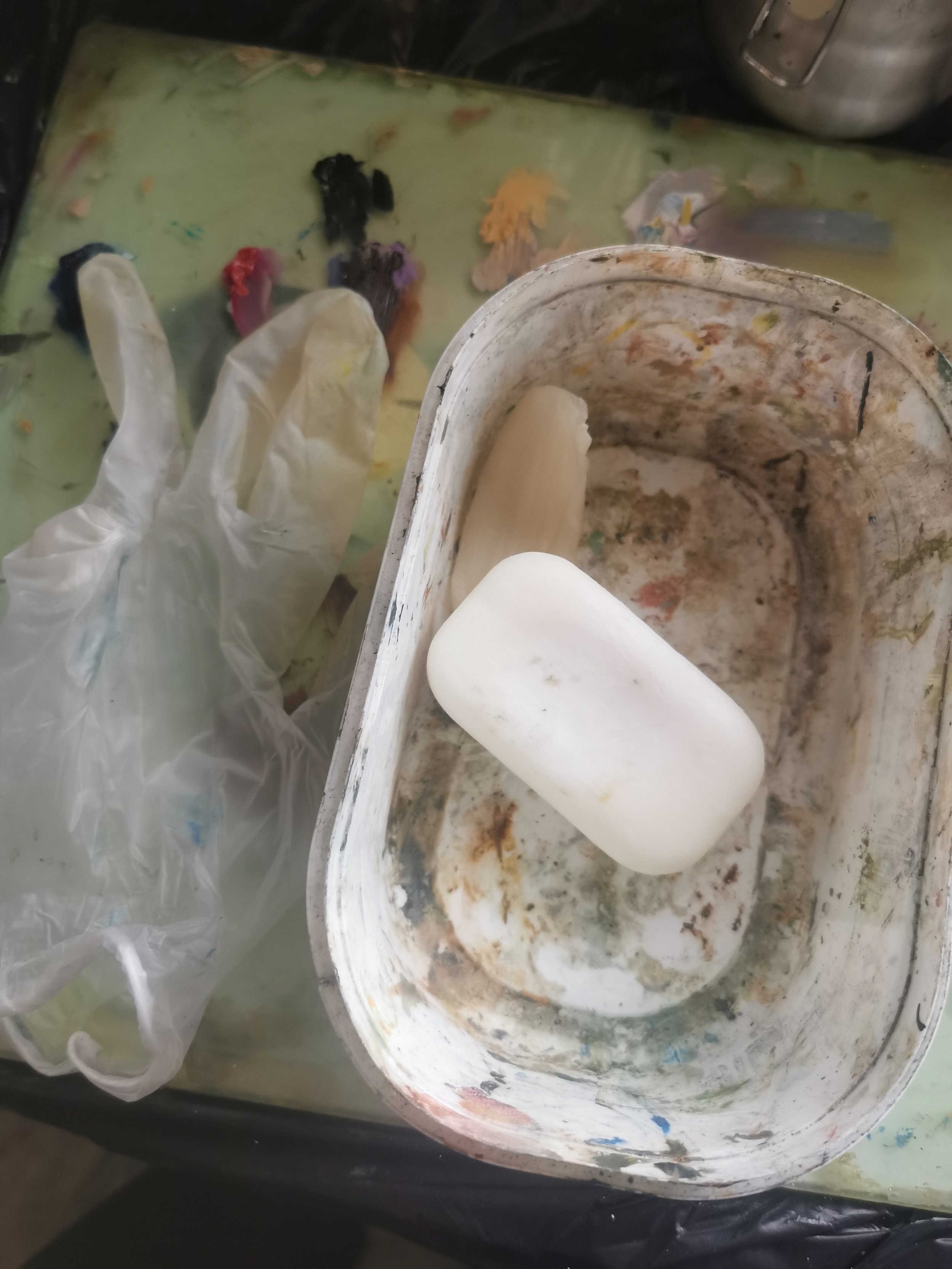
I don’t use specialist brush-cleaning solutions. Instead, I use a cheap bar of soap kept in a plastic container. After rinsing brushes in solvent (with gloves on), I work each brush back and forth on the soap, rinse, squeeze out the excess water, and repeat until the water runs clear. Brushes can lose their shape over time, but don’t throw them away—older brushes are great for expressive mark making.
Brushes and surfaces
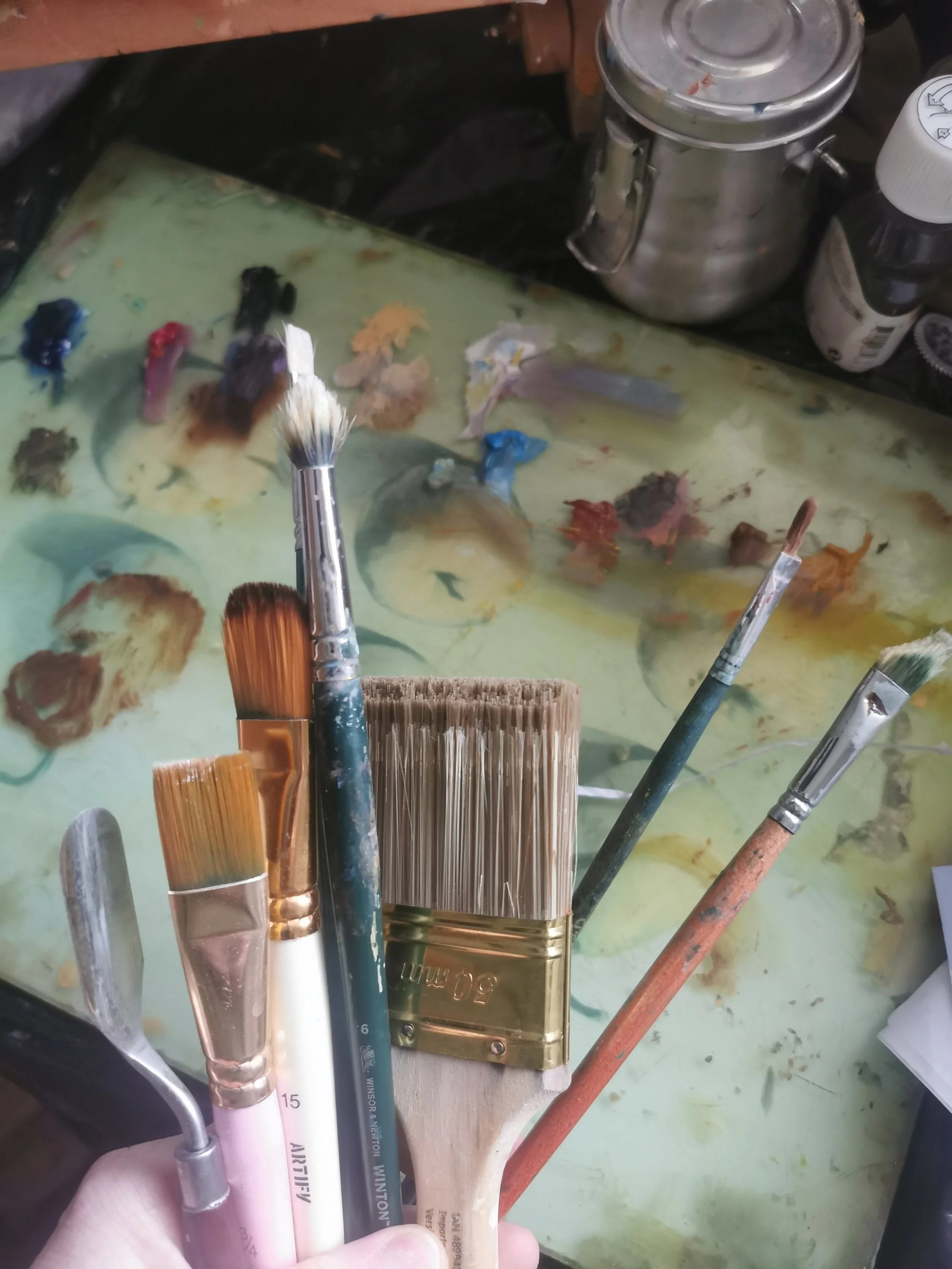
My brushes come from art shops, Temu, Amazon, and even hardware stores. Hog hair brushes are my favourites, but synthetic brushes are useful too. Decorators’ brushes from hardware stores are excellent for covering large areas, and flat brushes are ideal for varnishing, allowing you to cover the whole canvas with fewer strokes.
There are many painting surfaces available: deep-edge canvas, hardboard, linen, and more. Linen can be expensive, while hardboard panels are lightweight and great for outdoor painting. I highly recommend priming your surface with gesso (see more here: https://www.deborahmccoyfineart.com/blog-3-1/dal7x3sua179lk6cmqqqr9v8n48m81). Gesso increases colour vibrancy, prevents paint from soaking into porous canvas, and helps inhibit mildew and mould. While you can skip this step at first, it’s well worth doing as you progress.
Simple, effective mediums
There are many oil painting mediums on the market, which can feel overwhelming. To keep things simple, here are two I found especially useful early on—both readily available from Winsor & Newton:
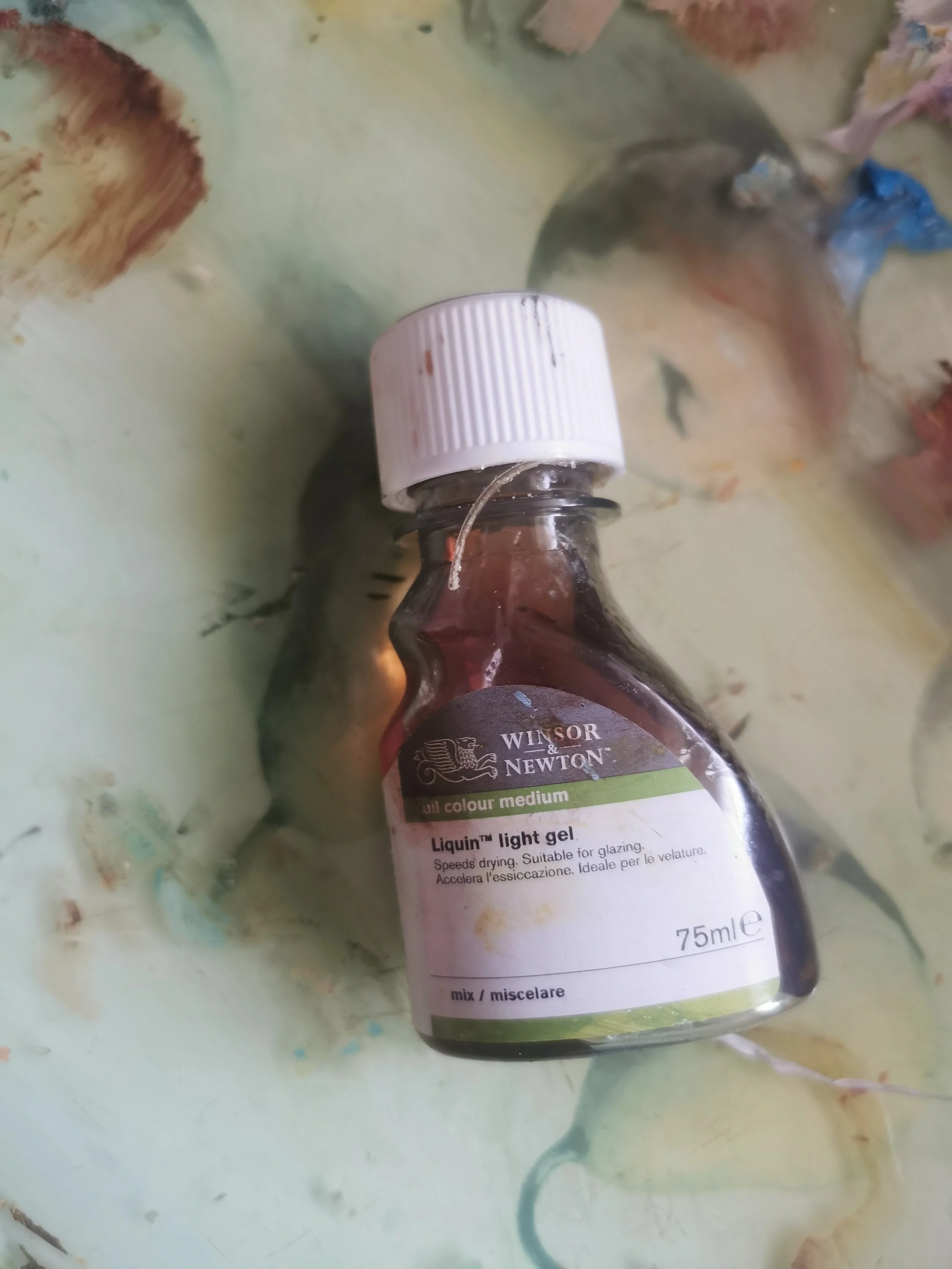
Liquin Light Gel – Speeds up drying time and makes working with multiple layers easier.
Linseed Oil – Available as cold-pressed or refined. Cold-pressed linseed oil makes paint “fatter” and dries slightly faster. Both improve paint flow and transparency.
These were the only mediums I used for a long time, until practice and experience gave me the confidence to expand my range.
The importance of sketching
Sketch as much as you can. This is where you experiment freely with colour, line, and mark making. Sketching helps you explore ideas, refine compositions, and understand proportion and perspective before committing paint to canvas.
