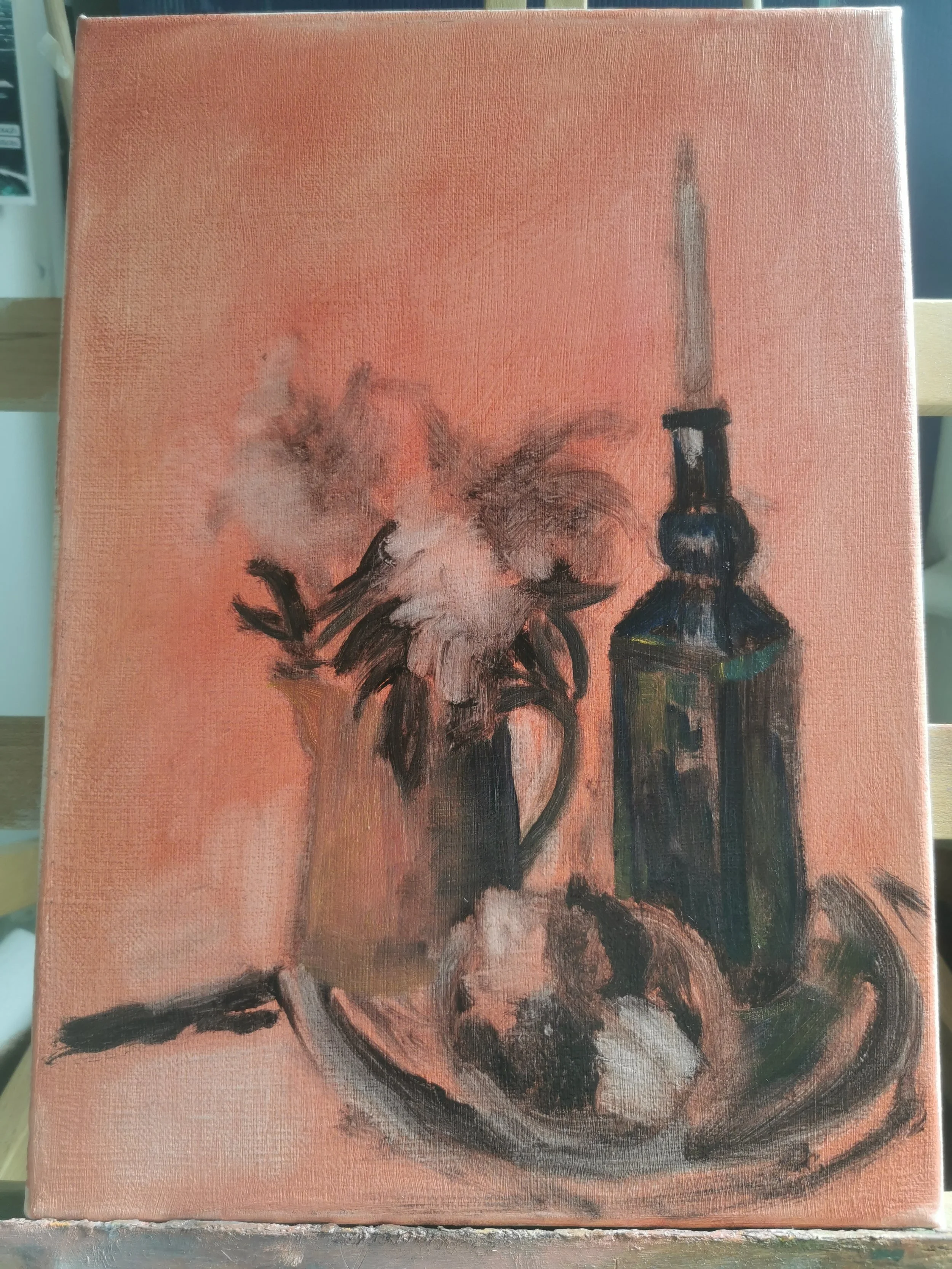
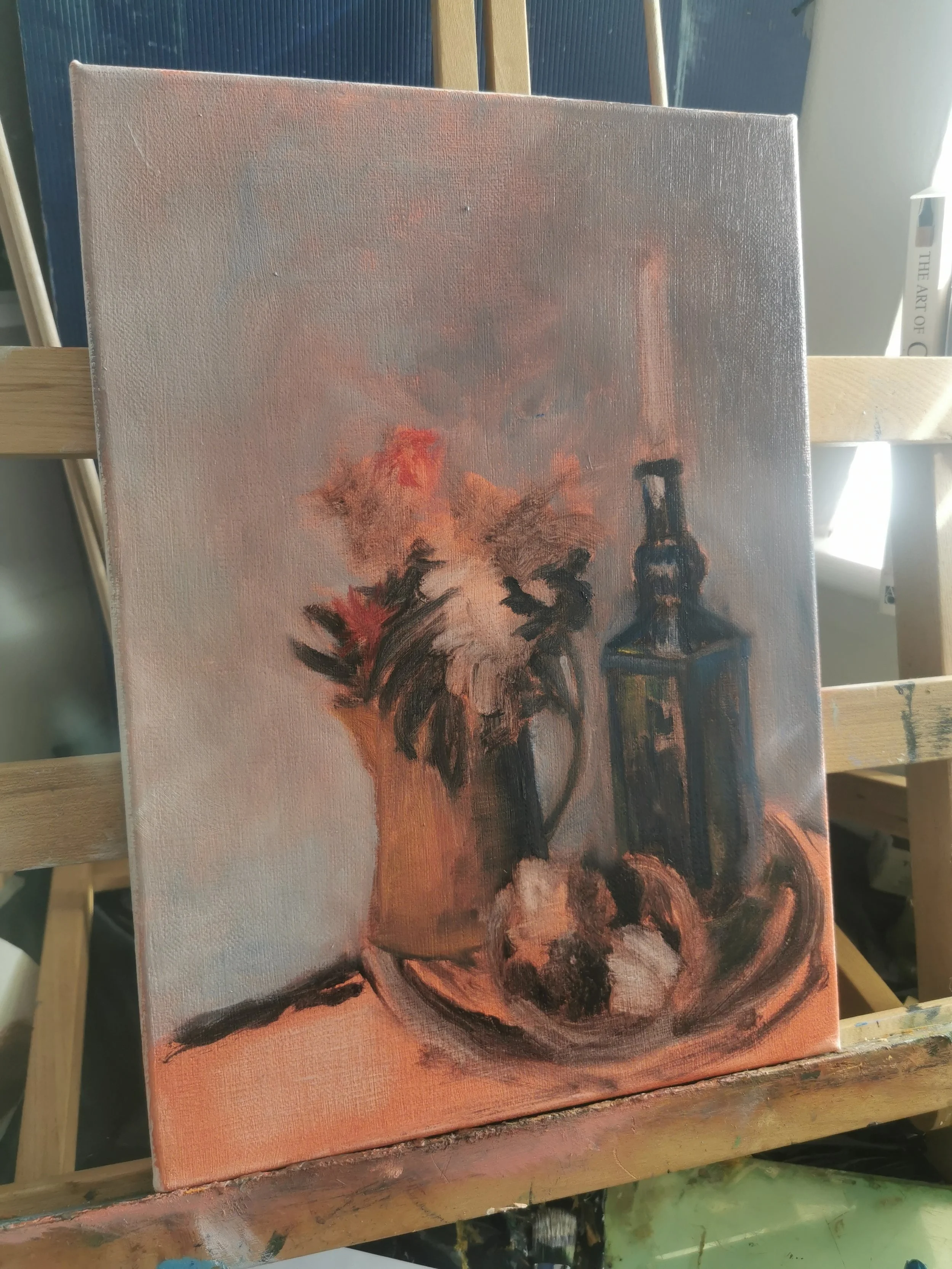
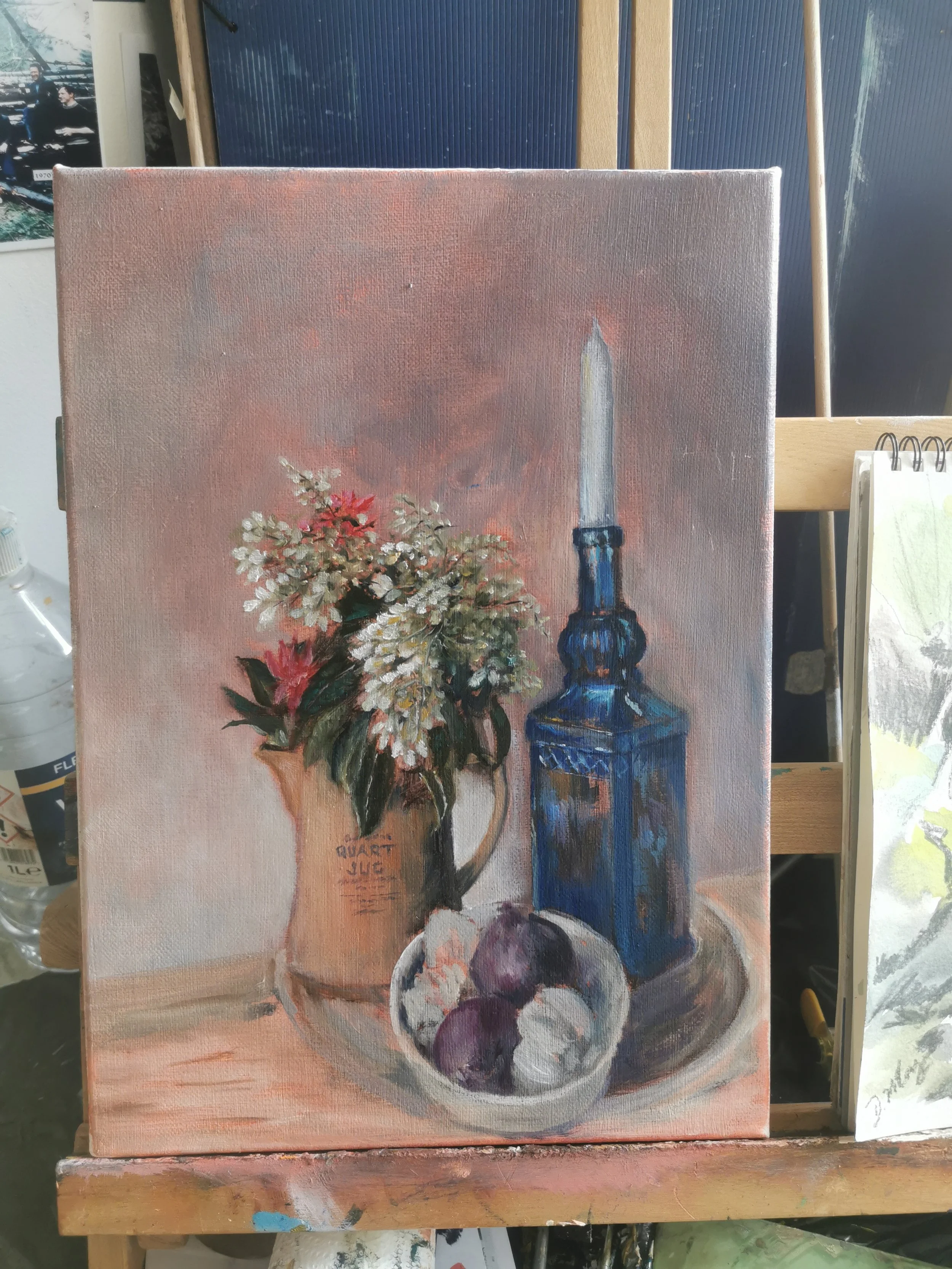
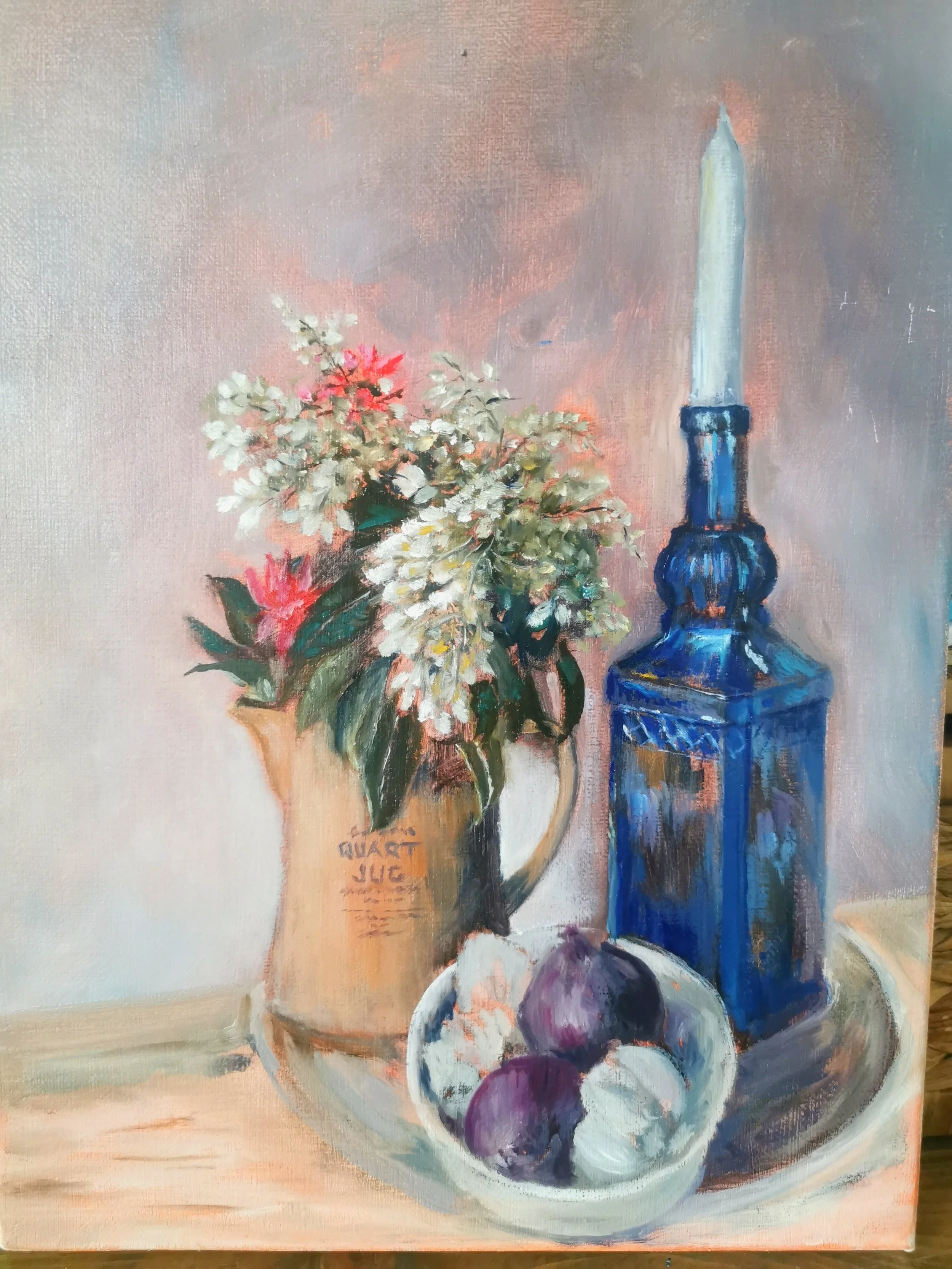
Still Life vs Landscapes
The term still life comes from the Dutch word stilleven, which was already in use by around 1650. It translates as “motionless life” or “quiet life.”
In my experience, painting intimate, everyday objects is technically easier than tackling landscapes. Landscapes present a visual challenge: complex scenes filled with patterns and shapes that demand careful composition. Decisions about what to include, how to simplify a vast view, and how to convey shifting light and atmospheric depth all come into play. Colour choice in particular mixing varied greens and handling perspective add further difficulty.
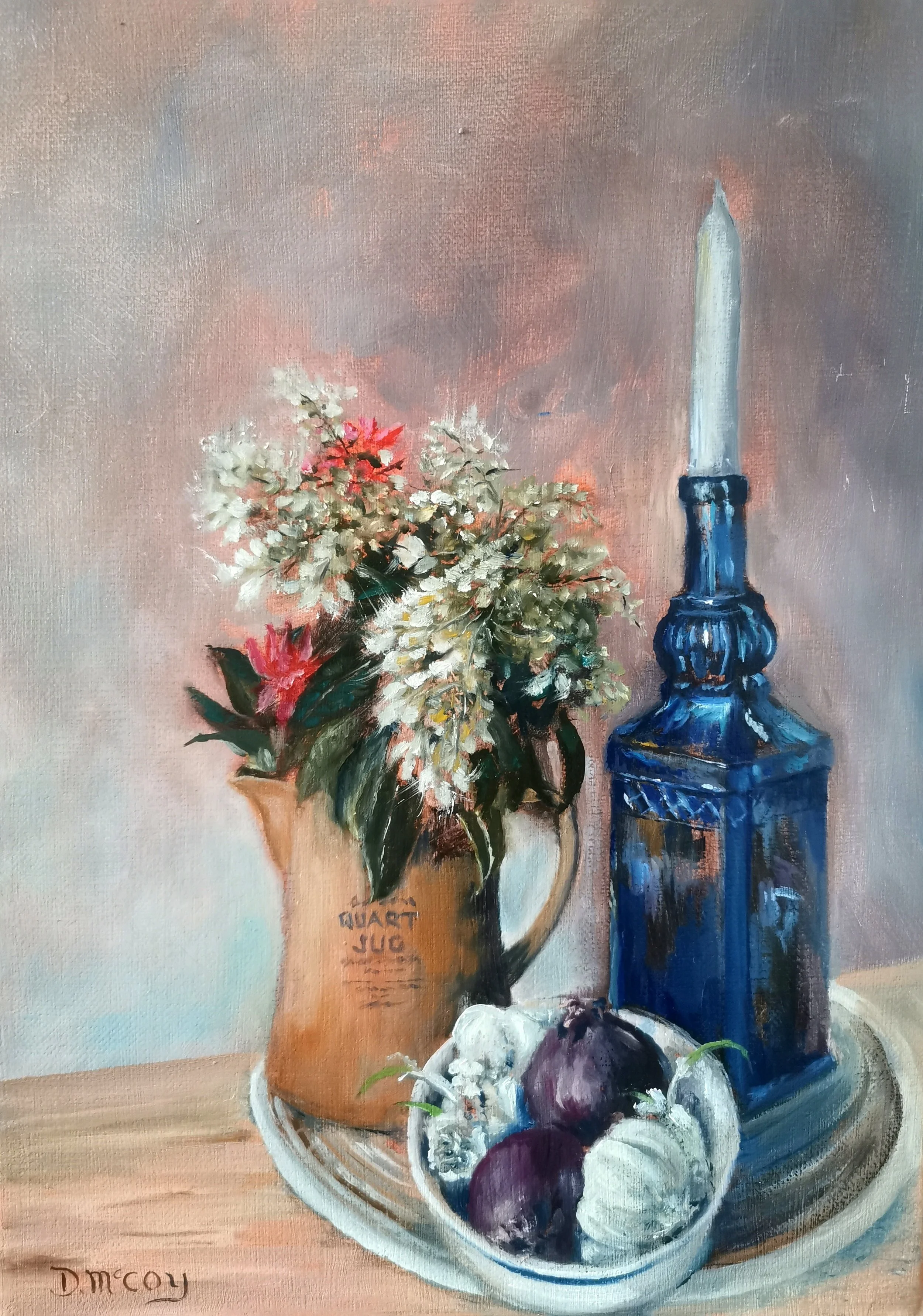
Still life offers greater control over the environment, though it demands close observation. Painting geometric forms requires a steady hand, with sharper lines and edges than those typically found in nature. Forms feel more deliberate and measured, with careful attention paid to directional light and the relationship between objects and negative space.
Still life has not been my focus for many years; more recently, I’ve been drawn to landscape painting. However, remaining artistically static is rarely beneficial. Exploring new subjects encourages growth and helps refine technical skills. While repetition can strengthen technique, it also risks stagnation. Expanding into different subject matter ultimately deepens and strengthens an artist’s voice.
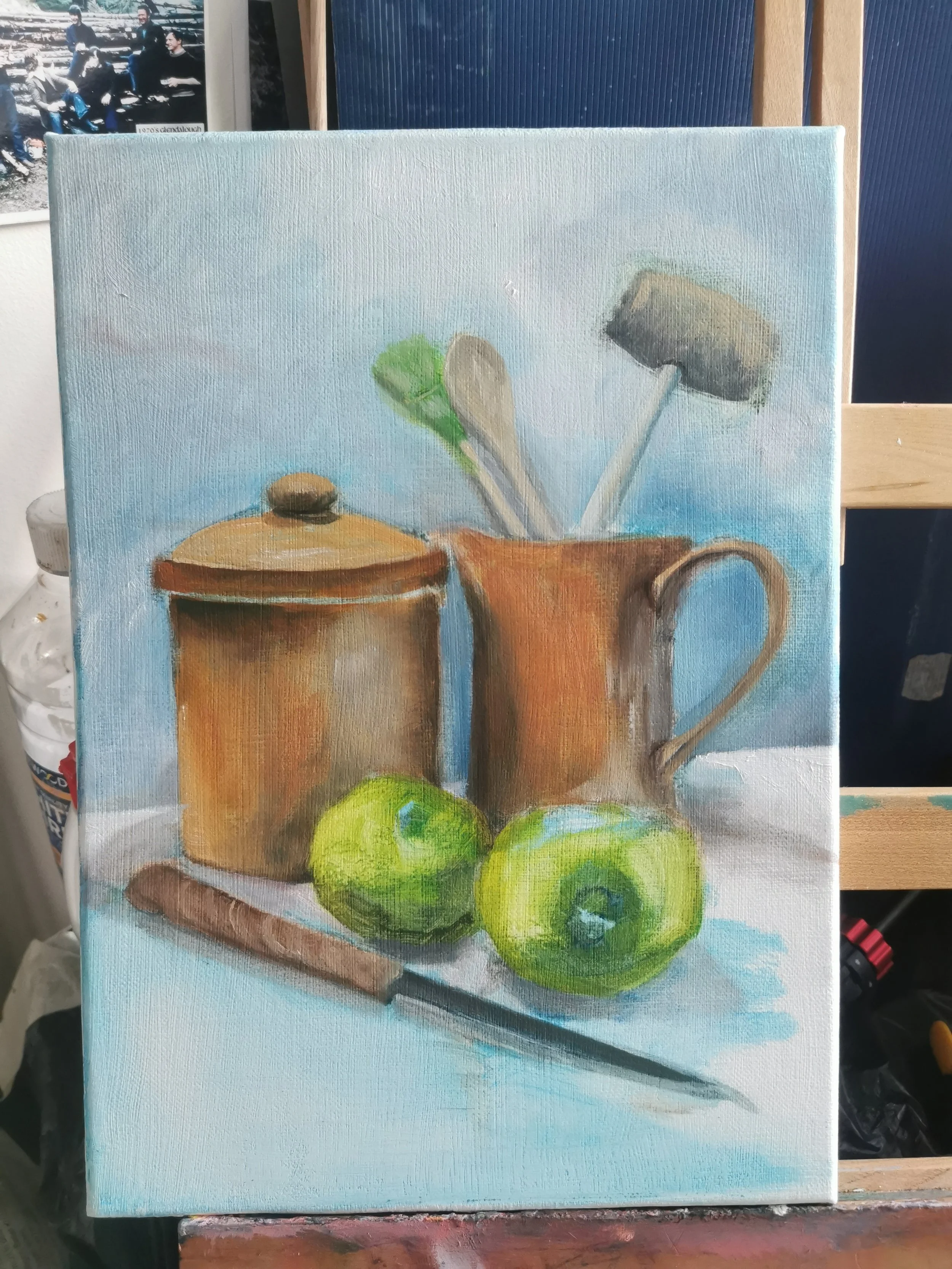
I have started another still life this week with my subject, again, the Original Suffolk pottery (see below). I am drawn to the rich colour of these kitchen objects and that earth tone but this time I have changed the temperature to cool and warm using the vibrant Michael Harding-cobalt teal paint for my underpainting. I will post on the finished Original Suffolk II on completion.